For months, with the dollar in free fall, investors have plowed their funds into commodities –raw materials can be used as a safe haven in difficult economic times.
“Commodities prices got way out of hand because people felt that when you couldn’t buy stocks because of the soft dollar and the economy, the place to be was in these hard commodities,” said Michael Rose, a trader at Angus Jackson in Fort Lauderdale, Fla.
“Every speculator in the world bought gold and crude oil and the grains and coffee and sugar and cocoa. Prices became insane.”
Many investors had expected the Fed to cut by a full percentage point, which would have sent down the value of the dollar. However on Tuesday, the Fed cut interest rates by 0.75%.
But the Fed’s smaller-than-expected rate cut sent the dollar up. Investors who had seen commodities as a hedge against the dollar scrambled to get out of their bets.
Oil tumbled 6.9 percent in two days of trading, and most other commodities fell by 7 percent or more in that period — including a precipitous 15 percent drop for wheat.
Source: The New York Times
Friday, March 21, 2008

Thursday, January 11, 2007
Sophies World
 Jostein Gaarder, Fiction/Non Fiction
Rating: Stirfried bittergourd
I finally managed to get though all 500+ pages of Sophie’s World this year after trying every year since I was 14(my enthusiasm always dies somewhere around page 165). The book is about a girl called Sophie who one day begins to receive letters from a mysterious stranger. Mind you, this isn’t a Scandinavian paedophile story (Sophie lives in Norway) –Sophie’s World is about the History of Philosophy. Seriously. There’s stuff on Socrates and Plato, Jesus Christ, all the way up to Freud and Karl Marx. Not the sort of thing you’d stomach as a kid but something you grow to love as an adult (hence the title).
Tuesday, January 02, 2007
On Dignity
"Please stop, the man is being executed, please stop." The man. Not the monster, the butcher, the tyrant. Saddam's killers have achieved the impossible: they have made us feel sympathy for him, for his grace under pressure. There may not have been dignity in the dying, but there was courage. A five-star death.
Stephen Moss of The Guardian expresses what I couldn't.
Monday, January 01, 2007
On Saddam Hussein
I found photos of Saddam Hussein's execution inappropriately splashed on the front pages of newspapers everywhere. It's not very pleasant to wake up in the morning and see a photo of some guy with a noose round his neck facing his execution even if he was obviously a very bad man.
You could argue that we've seen photos of casualties from wars, terrorist attacks, earthquakes, the tsunami. Unfortunately we hardly ever know much about who they were. But we know a lot about the late Saddam Hussein. Media coverage of his dictatorial rule allowed us nuggets of information which made him more real and more human to me.
Did we really have to repay an eye for an eye though. Yes he was a really evil man and I'm sure his inhumane acts of violence weren't exactly respectful to human dignity.
Being sentenced to death is no walk in the park. Those who sentenced him were, I assume, on relatively higher moral ground. They could have at least allowed him the right to a dignified death rather that the media circus it turned out to be.
Thursday, December 28, 2006

On Beauty
 Zadie Smith, Fiction
Rating: Addictive like banana leaf rice at Nirwana
I arrived at the airport way ahead of schedule last Friday so I found a nice nook at the KLIA KFC and devoured On Beauty (and a Zinger Maxx).
KFC doesn’t gross me out as much in Malaysia as it does in the UK. It’s hard to describe the depths of its grotesque-ness. The outlet I used to pass by on the way to LSE totally reeks of over-used oil, the Circle line, the industrial age and Vicky Pollard.
But it’s different here. Hormone-laden poultry is a wholesome family affair all of a sudden. Who would have thought. You find nooks amidst the waft of deep-fried fat here.
Friday, October 27, 2006
Understanding Iraq

William R. Polk
Non-fiction
Understanding Iraq is an elaborate history of the country from ancient times through the advent of Islam up to what Polk describes as “American Iraq” today. The writer details how Britain tried and failed to establish an effective Iraqi state; how British-approved Iraqi monarchs tried and failed to establish an effective Iraqi state; and finally how Saddam Hussein succeeded briefly in doing so albeit brutal and authoritarian means.
Thursday, October 19, 2006
theCICAK.com
 The piece I wrote a month back about how SEA countries needed to buck up has been published by theCICAK.
I've made a number of changes to it, mostly injecting more of my personal opinions.
Check it out here.
FYI, they've organised a writing competition and if you win your work gets published in The Sun. So check that out too.
Saturday, October 14, 2006


Mom's Birthday
 We went to have dinner at this Thai place in Bangsar Village to celebrate my mom's birthday.
I've seen some really nice food pictures on blogs I've visited. One reason why this blog will NEVER be a food blog is because we're all usually too hungry by the time the food arrives to take silly aesthetic artistic looking pictures of green curry.
It's horrible...you end up with pictures of empty plates or in my case, a plate of uneaten rice and some leftover gravy.

Friday, September 29, 2006
The Harmony Silk Factory
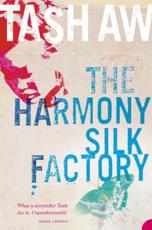 Tash Aw, Fiction
Rating: 4/5
The Harmony Silk Factory is written in three parts and details the life of Johnny Lim through the eyes of his son Jasper, his wife Snow and his Englishman friend Peter. Jasper’s tale is a lengthy description of the Kinta Valley during the earlier part of the 20th Century. THSF is a wonderfully romanticized version of colonial Malaysia –a refreshing perspective compared to the exam-centric history lessons I sat through in high school.
Sunday, September 24, 2006
Get Your Act Together
Rising giants
The leaders of
Greater intraregional cooperation is the sine qua non if this goal is to be achieved. Together, these countries make up a total population of 530 million, making it larger than the EU and the
Recent events tell us however that we still have a long way to go.
This has enraged Malaysian politicians particularly
Disregarding the truth or the atrocity of both their remarks, a more important observation is the damage it has done to bilateral ties.
Umno vice-president Tan Sri Muhyiddin Yassin told The Star that Mr Lee was among those who founded the concept of Asean co-operation to foster greater understanding in the region and should know that such remarks would not benefit the region.
While Singapore is undoubtedly the most successful country in the region, its restrictions on free speech as witnessed during the recent IMF meeting leave much wanting.
Perhaps it is this lack of public activism which has provided a stable environment for the city-state’s undeterred growth. If ASEAN is to rise in prominence, its members should follow suit with unconstructive comments being kept under wraps.
On Tuesday, the Thai military enforced a coup d’etat in
Other countries may stand to benefit from the coup as foreign investors withdraw funds from
But that is besides the point. In the long term, cohesiveness among ASEAN countries coupled with political stability is necessary for the region to acquire a competitive edge over rising giants
Friday, September 15, 2006
Building Bridges

Although the present administration has abandoned plans to build the infamous crooked bridge, a ‘half-bridge’ joining the existing Johor-Singapore causeway at midpoint, different and perhaps more substantial links between Singapore and Malaysia have been under construction.
Leaders from both countries met briefly during the Asia-Europe Meeting (ASEM) in Finland earlier this week where they discussed bilateral ties. Malaysian Prime Minister Abdullah Ahmad Badawi and his Singaporean counterpart Lee Hsien Loong agreed to cooperate on the economic development of Southern Johor.
Mr Badawi said plans to develop the South Johor Economic Region, revealed under the Ninth Malaysia Plan (9MP), were meant to complement and not compete with Singapore. The PM has expressed hopes that development in Southern Johor would echo that of China’s Shenzhen province which had grown to become an extension of metropolitan Hong Kong.
Apart from bilateral ties, regional issues were also discussed. Both leaders voiced concern over the lack of interest on the part of foreign investors towards South East Asia, who favoured India and China instead.
They agreed that greater cooperation between the Association of South East Asian Nations (ASEAN) was vital to get the region on the map. ASEAN needed to be seen as a single entity instead of ten distinct nations since together they boasted a total population of 530 million –a figure surely large enough to attract the attention of foreign investors.
It would also be wise for Malaysia to be on good terms with its immediate neighbour in order for both parties to be adequately prepared in the fight against global threats such as international terrorist groups or a potential worldwide SARS outbreak.
At the height of bridge-related antagonism, Singapore abandoned talks to replace the existing causeway with a new suspension bridge in 2002 after Malaysia refused to discuss supplying water to the city-state after 2061.
The bridge idea was rejected under the pretext of ‘nostalgic value’ and the claim of costs being too high in comparison to benefits received. One reason for this lack of enthusiasm could have been because the existing causeway led traffic flow away from the port in Johor to Singapore’s benefit.
The problem of pollution in the Straits of Johor would be solved at the advent of the new bridge. The current causeway had obstructed the natural flow of tide leading to unhealthily stagnant waters.
The new bridge would also ease severe traffic conditions in Johor Baru as it would cater to double the present traffic volume. But even with the crooked bridge, drivers would face traffic congestion anyway as long as Singapore continued using their half of the old causeway.
The bridge had to be high enough to allow ships to pass beneath it. It also needed to gain this height gradually as too steep a climb would hamper access for heavy vehicles.
Both these physical conditions coupled with Singapore’s refusal to replace the causeway left then Prime Minister Tun Dr Mahathir Mohamad with “no choice but to opt for a crooked bridge”. In August 2003, Malaysia unilaterally announced intentions to push ahead with the RM460 million-project anyway.
In October 2003 however, a change in administration left the project in limbo as Mr Badawi attempted to mend broken ties.
His efforts have certainly been fruitful. The Malaysia-Singapore relationship has been on an upward trend under Mr Badawi’s watch after sinking to unprecedented lows towards the end of the Mahathir-led administration.
Even the former premier admitted that relations with Singapore had improved as a result of Mr Badawi’s gentler approach.
Mr Badawi’s first visit to Singapore in January 2004 produced a pleasant surprise when it was announced that plans to resolve issues through an international court had been scrapped. It was agreed that both countries were to give bilateral talks another shot.
Singapore’s Senior Minister Goh Chok Tong said on Tuesday that cooperation between both countries was certainly encouraged. His affirmation of Mr Badawi’s non-confrontational style was implicitly evident when he urged Mr Abdullah “to look forward and not look back into the past. Minister Mentor Lee Kuan Yew’s time and my time, that’s over.”.
Large-scale projects to construct cutting-edge architectural wonders are most certainly welcome in Malaysia. These will not only boost the local construction industry but also serve as a source of national pride.
Nonetheless, if Malaysia wanted to impress its neighbour and the rest of the world it should have focused on the efficiency and cleanliness of immigration counters first rather than making enemies in the pursuit of white elephants.
Monday, September 11, 2006


Saturday, September 09, 2006
Actorlympics
 A few of us went to catch Actorlympics on Thursday night at Actors Studio Bangsar. For the uninformed, it’s like Drew Carey’s “Whose Line is it Anyway?” TV show. I was looking forward to watching Ida Nerina and the legendary Harith Iskandar but as luck would have it, she wasn’t performing that night and he wasn’t taking part this year at all. Nonetheless, we were all majorly tickled by Afdlin Shauki and Reza Zainal Abidin.
I found out from Shauki’s blog that NTV7 is to air 13 episodes of Actorlympics in the near future. This is good news for me as I don’t think I’d be able to fork out RM42 per ticket (we paid a reasonable RM22 as students this time) even for countless Siti Nurhaliza-Datuk K jokes.
The question is, how much of the show's spontaneous and politically incorrect edge will be lost given the fact that whatever the actors say this time will be recorded and broadcast to a more diverse and potentially less forgiving crowd?
Ok, whatever Stef. Anyway the bottomline is: we laughed a lot and after that we went to have supper at Pelita.
Monday, September 04, 2006
Budget 2007
The Budget 2007 announcement on Friday will hopefully be the light at the end of the tunnel for Malaysian politics. No one should dispute the fact that the run-up to this year’s Merdeka celebrations had been particularly tumultuous.
Soured relations between ex-prime minister Tun Dr Mahathir Mohammad and current premier Abdullah Badawi gained embarrassing national headliners as well as international attention.
Rifts within Barisan Nasional, the ruling coalition, were also cause for concern. Khairy Jamaluddin, Deputy Chairman of Umno Youth caused a public furore when he reportedly suggested that non-Malays would take advantage of a weak Umno –one of the three founding member of the coalition –if members were divided.
Wong Chun Wai of The Star praised the new budget for boosting public morale which had taken a bashing in recent months over racial issues. “There will surely be a chorus of approval for Datuk Seri Abdullah Ahmad Badawi’s many decisions in the Budget, which has emphasized on needs rather than race,” he wrote.
Under the new budget plan, examination fees for UPSR, PMR, SPM and STPM are to be waived. Students whose family income amounts to less than RM1,500 will be awarded scholarships if they score 10A1s in the SPM exams.
About 542,000 pensioners also stand to benefit from a one-off payment of up to RM400. Apart from that, civil servants earning less than RM750 a month would receive a two month bonus.
All this will surely ease the burden on lower income families who have been the hardest hit by higher living costs and fuel prices.
The tax relief of RM3,000 for computer purchases and RM1,000 for books will mainly benefit those in higher income brackets. To illustrate the obvious, those living on a RM24,000 annual income are less likely to buy a new computer compared to those who earn RM100,000 a year. A new PC at RM4,000 would account for 17% of income earned by the former but for the latter the proportion is only 4%.
The government’s move to lower the corporate tax rate came as a pleasant surprise to many as Abdullah had refrained from reducing taxes in his previous two budgets in efforts to keep the budget deficit in check. The prime minister is counting on this reduction to spur economic growth.
The corporate tax rate will be cut to 27% in 2007 and 26% the following year. This is the first time in nine years that a reduction has taken place –the rate was previously lowered back in 1998 from 30% to the current 28%.
While the 2007 budget has been a boon to many, it should be noted that a one percentage point cut in corporate tax will imply a loss in government revenue of RM1 billion a year. While the government intends to balance the budget in the long run, this time the government is incurring a deficit of 3.4% of GDP.
To justify the government’s budget deficit it is important that meritocracy and efficiency are upheld as best practices in the country. Decision-making should at all times be based on merit and never on political connections.
Further development of Information and Communication Technology (ICT) was one government-implemented move in efforts to add value to the domestic economy. Mimos Bhd, a research and development organisation in this area will receive RM162 million under the new budget. Financial weekly The Edge has reported that “little has come out” of the RM2 billion that has been invested in it.
Sunday, September 03, 2006
Broken Bridges -The Musical
 Ten of us i.e. Team P.A.N.G.A. spent Friday night at KLPAC watching Broken Bridges. The musical's simple storyline complimented what I thought to be a rather intricate collection of songs.
The story is about Ming an Ipoh boy who wants to go to KL, where there are arguably more hot girls. However his dad wants him to stick around to take over the family-run coffee shop.
Colin Kirton put up an impressive show as Wong, the protagonist's dad. Ho Soon Yoon, who played Ming's best friend, did not only sing well and keep us amused with his comical performance, he also left a few of us craving for char siew pau after the show.
Of course for Team P.A.N.G.A. , we had eyes only for Pangasaasanii -the ex-Hartamasian who played one of the kei poh aunties and from whom I used to get really good vegetarian chicken during rehat time.
291206